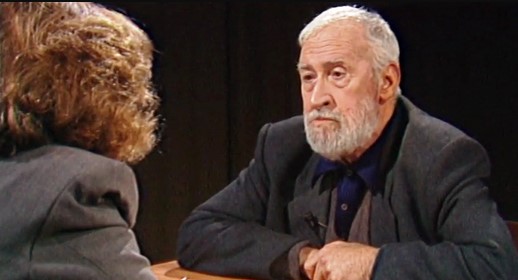
SS_01/14 -> Notes from Conversas Vadias #1 – Agostinho da Silva in conversation with Maria Elisa
Notes from Conversas Vadias #1
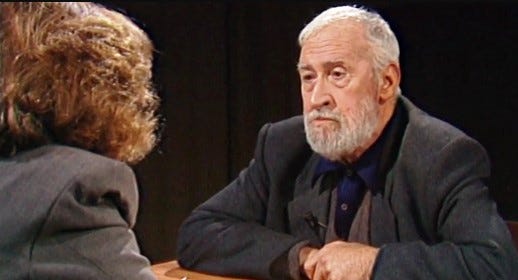
Agostinho da Silva in conversation with Maria Elisa
Originally broadcast by RTP on 8 March 1990.
Available through the RTP Archives.
Some conversations become outdated.
Others quietly wait for the future.
This one feels like the second.
While watching the first episode of Conversas Vadias (in 2021), I found myself writing almost continuously. Not because Agostinho da Silva was giving answers, but because he had an unusual ability to expose assumptions most of us don’t even realise we’re carrying.
One of them appears almost immediately.
Most students spend years tolerating teachers they never asked for.
It sounds provocative.
Until you realise he’s not attacking teachers.
He’s questioning the architecture.
School, as we designed it, assumes that learning can be scheduled, standardised and imposed.
Agostinho seems to suggest something much simpler.
Learning follows curiosity.
Not the other way around.
That idea appears repeatedly throughout the conversation.
Children already know that much of what they’re forced to learn won’t matter.
Reading only becomes meaningful when there is something worth reading.
Questions come before answers.
Purpose comes before motivation.
Perhaps the most radical thought, however, isn’t about education.
It’s about work.
He argues that every person is born both inventor and poet.
Not metaphorically.
Literally.
Creation is our natural state.
The military discipline we later call “professional life” is largely something we learn.
Which leads to one of my favourite ideas from the episode.
Humanity wasn’t born to work.
It was born to create.
In 1990 this probably sounded utopian.
Today, with AI, automation and increasingly intelligent machines, it feels less like philosophy and more like a design question.
If machines increasingly perform what is necessary…
What exactly remains uniquely human?
Agostinho’s answer is surprisingly consistent.
Creation.
Relationships.
Attention.
Presence.
He even imagines a society where retirement is no longer the privilege of old age but the default condition of being human.
Not retirement as inactivity.
Retirement as freedom from compulsory labour.
Another idea that stayed with me is his distinction between culture and survival.
Before discussing art, literature or museums, society has a simpler obligation.
Food.
Health.
Shelter.
Only afterwards does culture truly begin.
His three foundations are beautifully simple:
- Sustenance.
- Knowledge.
- Health.
Everything else grows from there.
Looking back, what strikes me most isn’t whether Agostinho was right.
It’s how many of his questions have become more relevant thirty-five years later.
Artificial intelligence.
Universal basic income.
The future of education.
Automation.
Purpose.
We’re still debating many of the same things.
Perhaps we’ve simply caught up with the conversation.
———
Original source
Conversas Vadias — Episode 1 → https://www.fernandomoreira.me/conversas-vadias-episodio-1-agostinho-da-silva-com-maria-elisa/
Agostinho da Silva in conversation with Maria Elisa
Broadcast by RTP on 8 March 1990.
Available through the RTP Archives.