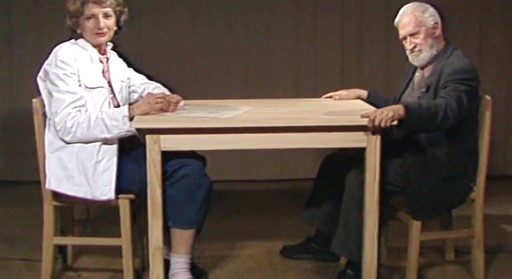
SS_04/14 → Notes from Conversas Vadias #4 – Agostinho da Silva in conversation with Isabel Barreno
Notes from Conversas Vadias #4
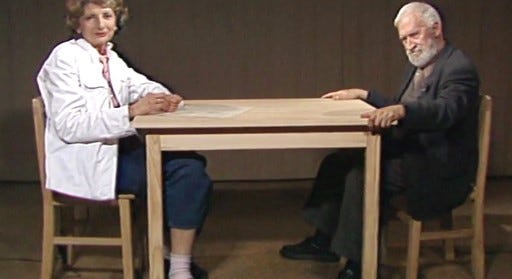
Agostinho da Silva in conversation with Isabel Barreno
Originally broadcast by RTP on 29 March 1990.
Available through the RTP Archives.
Every civilisation has its favourite word.
Today, it might be mandatory.
Mandatory education.
Mandatory careers.
Mandatory productivity.
Mandatory success.
Mandatory opinions.
Agostinho rarely attacked these things directly.
Instead, he asked a quieter question.
What happens when everything important becomes an obligation?
One sentence from this conversation stayed with me.
I hope that one day everything that is compulsory for production will no longer be compulsory.
It’s a remarkably optimistic sentence.
Not because it predicts a technological future.
But because it imagines a human one.
A future where necessity no longer dictates identity.
Where people are finally free to create their unique work.
Not because they have to.
Because they can.
That distinction feels increasingly relevant.
We often confuse freedom with having more options.
Agostinho seems to suggest something deeper.
Freedom begins when obligation ends.
Another idea appears throughout the conversation.
Everyone is different.
Not slightly different.
Completely different.
There is no model human being.
No ideal personality.
No correct way to live.
Every idea in the world should ultimately become personal.
Otherwise, it remains someone else’s life.
He even says something that initially sounds almost absurd.
That he has no conflict with Portugal because he chose to be born there.
Whether you take that literally or metaphorically almost doesn’t matter.
The underlying idea is more interesting.
Gratitude changes perspective.
You stop asking why life happened to you.
You begin asking what can be created from where you already are.
Towards the end of the conversation, Agostinho describes what he calls the Age of the Holy Spirit.
Not as a religious doctrine.
But almost as a civilisational possibility.
Children growing without losing their spontaneity.
Life becoming freely accessible.
Crime disappearing not because punishment became harsher…
…but because scarcity itself disappeared.
It’s an impossible vision.
At least for now.
But Agostinho often reminds us that utopian doesn’t mean impossible.
It simply means it doesn’t exist yet.
Perhaps that’s why he never seemed interested in predicting the future.
He preferred expanding what we believed was possible.
And maybe that’s where every meaningful future begins.
Not with certainty.
But with permission to imagine differently.
Original source
Conversas Vadias — Episode 4 → https://www.fernandomoreira.me/conversas-vadias-episodio-4-com-isabel-barreno/
Agostinho da Silva in conversation with Isabel Barreno.
Broadcast by RTP on 29 March 1990.
Available through the RTP Archives.